
Call Now: 612-462-2610 · Free Estimates · Open 7 Days
Nova Concrete
Exposed Aggregate Patios That Look Great and Last

Bloomington, MN

Exposed Aggregate Patios That Look Great and Last

  • Licensed & Insured
  • Free In-Home Estimates
  • Serving the Twin Cities metro
Driveways Patios Stamped Concrete Garage Slabs
4.8/5 from 66 Google reviews
Trusted
By Local Homeowners
Fast
Response Time
4.8-Star
Rated on Google
100%
Licensed & Insured

Bloomington, MN

Get to know Nova Concrete

Exposed aggregate is genuinely worth it for most homeowners who want a surface that's durable, slip-resistant, and visually interesting without the maintenance that pavers demand. The finish holds up hard through Minnesota freeze-thaw cycles, and when it's poured and sealed correctly, you're looking at 30 to 40 years of reliable service. Nova Concrete has 12 years of experience placing exposed aggregate throughout the Twin Cities metro, we're fully insured, and every job comes with a 1-year warranty. Call (612) 462-2610 before your project season books up.

The process starts with pouring a standard concrete slab, then applying a surface retarder to slow the curing at the top layer. Once the base sets, we wash and scrub the surface to reveal the aggregate underneath. The look you get depends entirely on the stone mix we use: natural river rock, crushed granite, colored quartz, or glass pebbles all produce different results. Size, site access, and the decorative aggregate you choose are the biggest cost drivers. Projects typically range from $2,500 to $15,000 or more depending on square footage, site prep, and finish complexity. Every job is different — contact Nova Concrete for an accurate estimate.

What Makes Exposed Aggregate Different from Standard Concrete

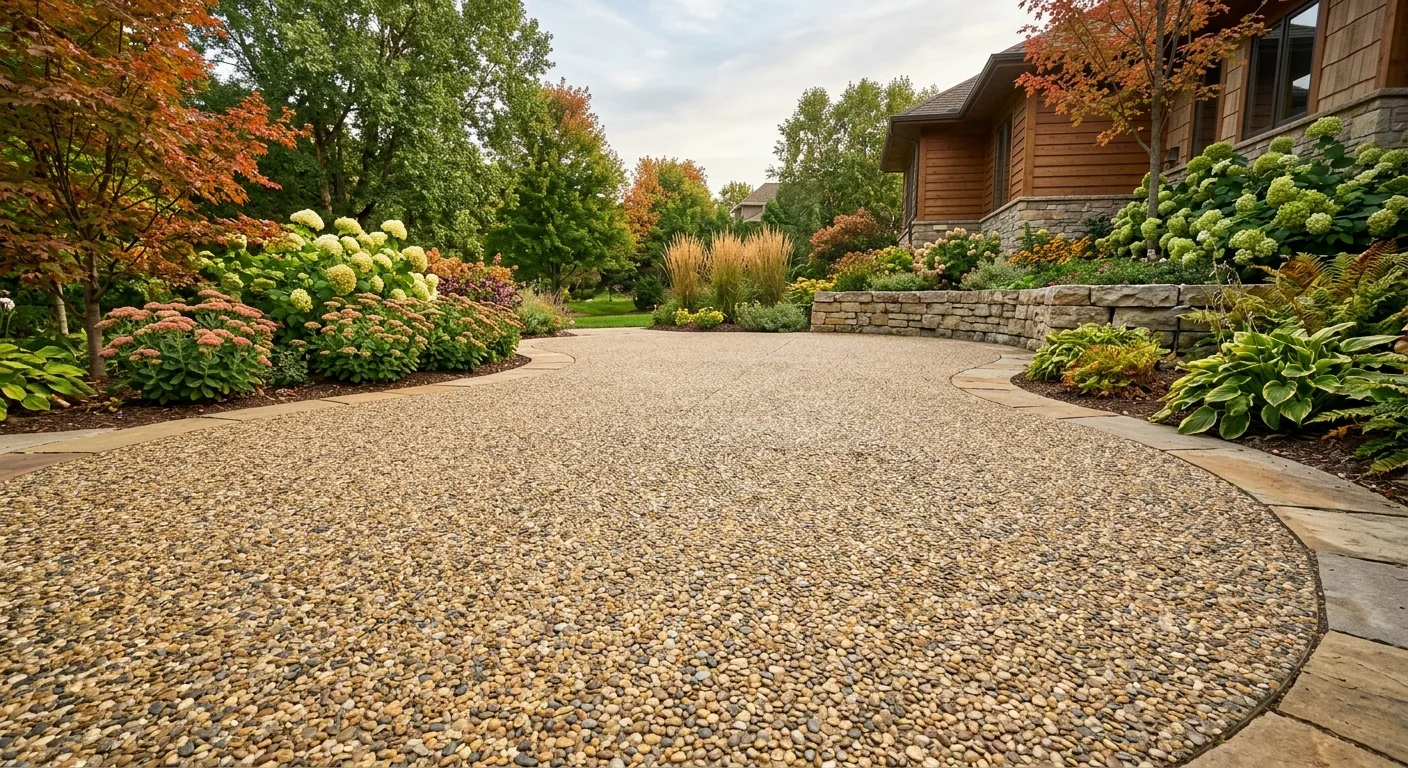
Standard concrete patios and driveways give you a smooth, uniform gray surface. Exposed aggregate gives you texture, color, and depth by revealing the stone embedded in the mix. That texture isn't just aesthetic. It creates a naturally slip-resistant surface, which matters on a patio where water pools or near a pool deck where bare feet are the norm. The aggregate stones also diffuse light differently than smooth concrete, so the surface looks less stark and washed-out in direct sun. If you've looked at stamped concrete and found it too formal or pattern-heavy, exposed aggregate is usually the better fit. It reads as natural, not manufactured.

What we do

The Exposed Aggregate Installation Process at Nova Concrete

We don't rush the retarder step, and that's where most bad jobs go wrong. Here's how we approach every exposed aggregate pour.

Site Prep and Forming

We excavate to the correct depth, establish grade for drainage, and set forms precisely. Skipping proper sub-base compaction is the number one cause of cracking — we don't skip it.
Concrete Pour and Aggregate Placement

We mix or source concrete with the decorative aggregate already integrated. Uniformity in the mix means a consistent finish across the entire slab — no patchy spots where stones cluster.

Surface Retarder Application

A chemical retarder is applied to the surface immediately after the pour. This slows curing at the top layer while the base sets hard underneath. Timing here is not forgiving.

Washing and Exposure

Once the base has cured enough to hold, we pressure-wash the top surface to remove the soft cement paste and reveal the aggregate beneath. Depth of exposure is controlled during this step.

Sealing

A penetrating or film-forming sealer locks the surface, enhances color, and protects against Minnesota's salt and freeze-thaw damage. We seal every exposed aggregate project before we leave the site.

What we do

Key Facts About Exposed Aggregate Concrete

Here's what's actually true about the material, without the sales spin.

Lifespan

A properly poured and sealed exposed aggregate surface lasts 30 to 40 years in cold climates. Resealing every 3 to 5 years is the main maintenance task.

Slip Resistance

The textured surface provides significantly better traction than broom-finished concrete when wet, making it a practical choice for pool surrounds and entry walkways.

Cost vs. Standard Concrete

Exposed aggregate typically runs 15 to 25 percent more than plain concrete due to decorative aggregate material costs and the additional labor involved in the retarder and wash process.

Repair Visibility

This is the honest drawback: if a section cracks and needs patching, matching the original aggregate mix and exposure depth exactly is difficult. Repairs are usually visible up close.

Barefoot Comfort

Coarser aggregate mixes can be rough underfoot. If the patio will see heavy barefoot traffic, we recommend a finer stone mix or a medium exposure depth.

De-icing Salts

Salt damages concrete. On an exposed aggregate surface, use sand for traction in winter and skip the rock salt entirely. Sealing protects the surface, but salt will eventually degrade any concrete finish.

Exposed Aggregate for Patios, Walkways, and Driveways

The finish works across multiple applications, but the right aggregate mix differs by use case. For patios and outdoor entertaining spaces, most homeowners want something visually warm, so river rock or rounded natural stone blends are popular. For walkways connecting a garage to a back door, you want grip over aesthetics, so a coarser crushed stone mix is usually the better call. For driveways, durability under vehicle load matters most — the aggregate needs to be dense and the slab thickness needs to be right for your vehicles. We've done all three, and we'll tell you directly if a choice you're considering won't hold up. Nova Concrete also handles commercial and residential projects of any scale, so if you're speccing exposed aggregate for a commercial property or multi-unit building, we've done that work too.

Reviews

What Our Customers Say

Rated 4.8/5 from 66 Google reviews

“Nova Concrete did our backyard patio in exposed aggregate and it came out exactly how we hoped. The finish is clean, the texture is consistent, and it's held up through two winters without any issues. Olidia's crew was professional and cleaned up completely before they left.”

Twin Cities Homeowner Verified Google review

“We got three quotes and Nova Concrete was the only contractor who walked us through the aggregate options and explained what would actually work for our space. The patio looks fantastic and the whole job was done in two days.”

Verified Google Review Verified Google review

“Honest communication throughout the whole project. They told us the exposed aggregate would cost more than a plain slab and explained exactly why. Worth every dollar.”

Verified Google Review Verified Google review

Free estimate

Get Your Exposed Aggregate Patio Estimate

We're available seven days a week, 9am to 7pm. Call (612) 462-2610 or use the online quote form to describe your project. Every exposed aggregate job comes backed by Nova Concrete's 1-year warranty. Check our warranty page for full coverage details.

Or send us your info

FAQ

Frequently Asked Questions

Is exposed aggregate cheaper than concrete? +
No. Exposed aggregate runs roughly 15 to 25 percent more than a standard broom-finished concrete slab. The cost difference comes from the decorative aggregate material itself and the additional labor required for the retarder application and pressure-washing step. If you're comparing to pavers, exposed aggregate is typically less expensive and requires less long-term maintenance. Every job is different — contact Nova Concrete for an accurate estimate.
How long does exposed aggregate concrete last? +
In Minnesota's climate, a properly installed and sealed exposed aggregate surface should last 30 to 40 years. The freeze-thaw cycle is the main stress factor here. Sealing every 3 to 5 years significantly extends lifespan by preventing water infiltration before it freezes and expands in the surface. Slabs that never get resealed tend to show surface degradation within 10 to 15 years.
What are the disadvantages of exposed aggregate concrete? +
Two honest ones. First, repairs are visible. If a section cracks badly enough to require patching, matching the original stone mix and exposure depth is nearly impossible — the repair will show. Second, rougher aggregate mixes are uncomfortable on bare feet. If your patio will see a lot of foot traffic without shoes, choose a finer aggregate mix or a shallower exposure depth and we'll spec it accordingly.
Is exposed aggregate concrete worth it? +
For most outdoor surfaces, yes. You get a surface that's more slip-resistant than smooth concrete, more durable than pavers under vehicle or heavy foot traffic, and visually richer than a plain gray slab. The 15 to 25 percent cost premium over standard concrete is real, but so is the 30 to 40 year lifespan and the minimal maintenance requirement. If you want a surface you won't be replacing in 10 years, exposed aggregate earns its cost.
How deep should the aggregate be exposed for a patio surface? +
The standard exposure depth for a patio is roughly one-third of the aggregate diameter, enough to show the stone clearly and create texture without destabilizing the surface. Deeper exposure increases slip resistance but also increases roughness underfoot and makes the surface slightly more vulnerable to surface stone loss over time. We adjust depth based on how the space will be used and what aggregate mix you've selected.
Can exposed aggregate be installed over an existing concrete slab? +
Not with a true exposed aggregate finish. The retarder and wash process requires a fresh pour. You can apply a decorative overlay with embedded aggregate on top of an existing slab, but that's a different product with a shorter lifespan. If your existing slab is in poor condition, removal and replacement with a new exposed aggregate pour is almost always the right call. We handle concrete installation and removal both.
How soon can you use an exposed aggregate patio after it's poured? +
Light foot traffic is safe after 24 to 48 hours in normal summer conditions. Full cure takes 28 days, and that's when the surface reaches its rated compressive strength. We apply sealer before we leave the site, which means you shouldn't get the surface wet or walk on it for at least 24 hours post-application. We give you a clear timeline at project completion so there's no guessing.

Related