
Bloomington, MN
Stamped Concrete Patios and Driveways in the Twin Cities
- Licensed & Insured
- Free In-Home Estimates
- Serving the Twin Cities metro
Request a Callback
Request a Callback
We respond same day. Free estimates, seven days a week.
- Trusted
- By Local Homeowners
- Fast
- Response Time
- 4.8-Star
- Rated on Google
- 100%
- Licensed & Insured
Bloomington, MN
Get to know Nova Concrete
4.8/5 · 76 Google reviewsNova Concrete installs stamped concrete patios and driveways across the Twin Cities, a decorative finish pressed into wet concrete with rubber stamps so the surface reads like stone, brick, slate, or wood. The reason it works here is the same reason plain slabs fail here: freeze-thaw. A properly based and sealed stamped slab holds up far better under Minnesota's 40-plus freeze-thaw cycles a season than pavers, which trap water in the joints and shift. We've been pouring stamped patios and driveways from Minneapolis and St. Paul out through the south-metro suburbs for 12 years, and every job carries a 1-year warranty and full insurance coverage. Call (612) 462-2610 for a free estimate.
Cost depends on the size of the slab, the pattern complexity, how many colors you're running, and site access. A basic single-color stamped concrete patio will run far less than a multi-zone driveway with custom borders and secondary accent colors. Market rates in the metro range from roughly $1,500 on the low end to $15,000 or more for large, complex installs. Every job is different. Contact Nova Concrete for an accurate estimate.
What Stamped Concrete Actually Is
Where We Install Stamped Concrete
Our Step-by-Step Stamped Concrete Process
Every stamped pour runs through the same sequence, and each step is where a job either gets built to last or gets rushed.
- Evaluate the site. Subgrade condition, drainage, and existing concrete all affect how we approach the pour. If the old slab needs to come out first, we handle removal as part of the job scope.
- Form and pour. We form and pour the slab, working integral color into the mix before the truck arrives on site.
- Color and stamp. While the concrete is still workable, we broadcast color hardener if the design calls for a stronger surface tone, then apply the release agent and press the stamps in sequence. Timing here is critical. Too early and the pattern won't hold definition. Too late and the stamps won't press cleanly.
- Wash and seal. After full cure, we pressure wash, let the surface dry completely, and apply a quality sealant. The sealant is what makes the color last through Minnesota winters.
Stamped Concrete vs. Pavers: What to Know Before You Decide
The Most Popular Stamped Concrete Patterns (and How They Actually Wear)
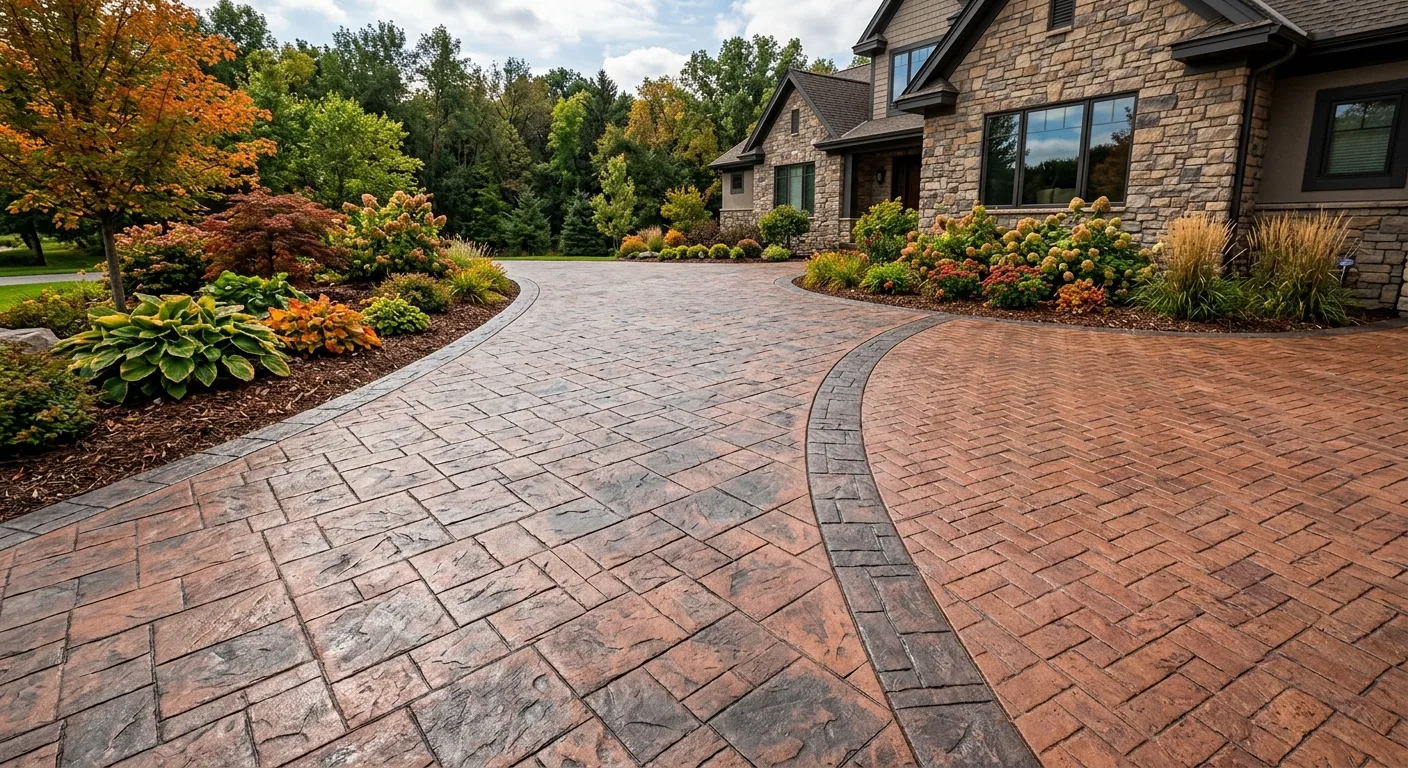
The most popular stamped concrete pattern by a wide margin is ashlar slate, a cut-stone look with clean rectangular seams. It reads modern, it hides minor surface variation well, and it's the pattern most Bloomington and Eden Prairie homeowners point to when they show us a photo. Cobblestone (running-bond or European fan) is the second most requested, especially for driveways where the smaller repeating units help disguise the control joints we have to cut anyway.
Here's how the common patterns actually behave on a real yard:
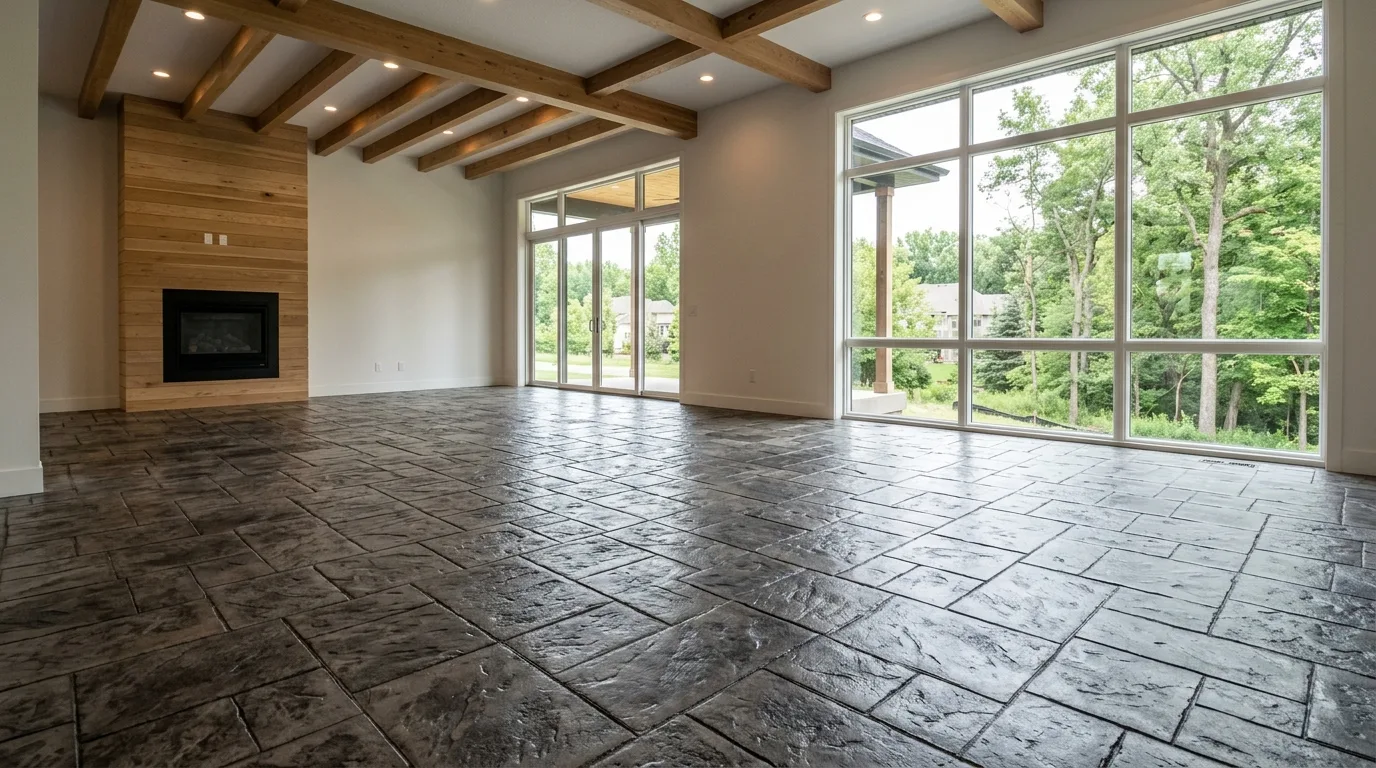
- Ashlar slate: the safe, high-resale choice. Large stone tiles, minimal texture, easy to keep clean. Our most-poured pattern in Apple Valley and Lakeville.
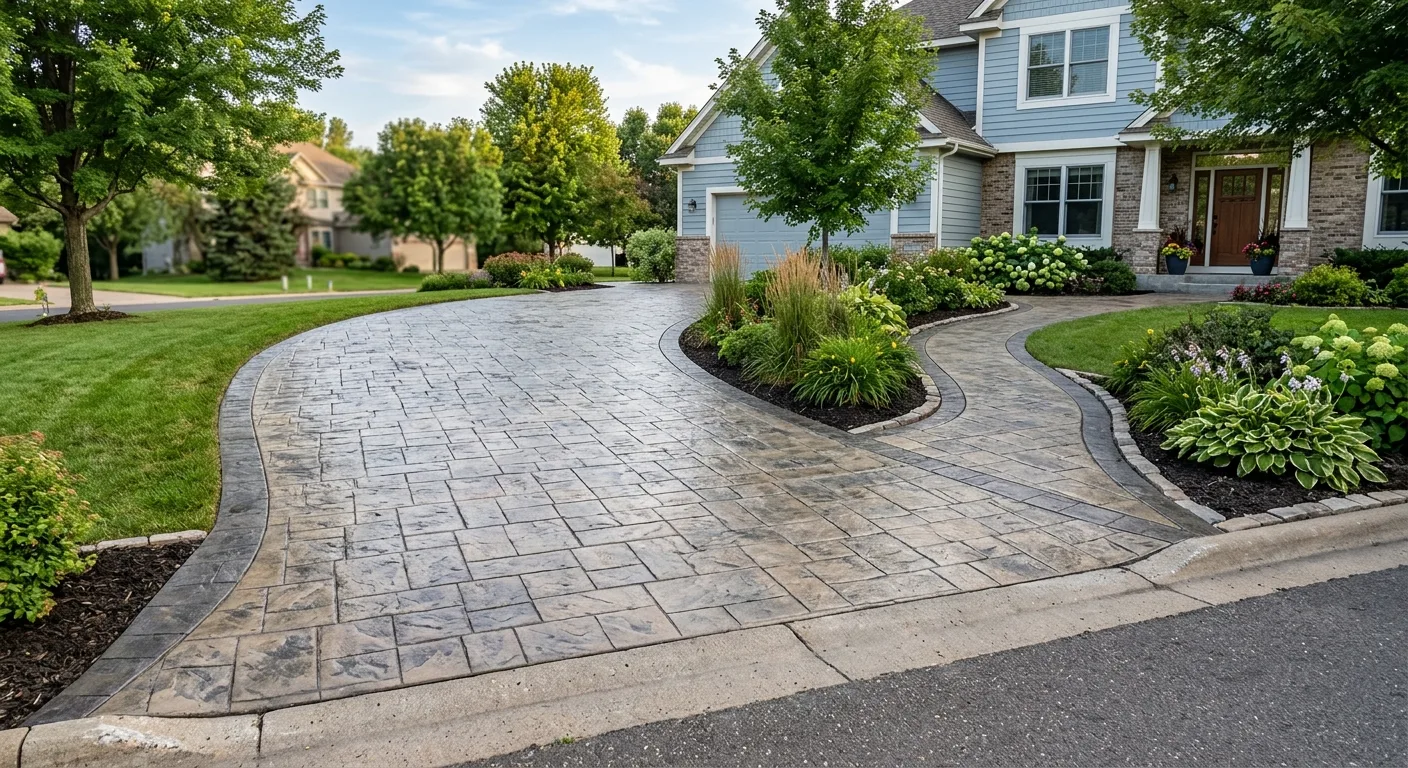
- Cobblestone / running bond: great for driveways and curved walkways. The busier joint lines hide cracks better than large-format stone.
- Wood plank: a board-formed look that's grown fast for modern builds. It photographs beautifully but shows dirt in the plank grooves, so plan on rinsing it more often.
- Herringbone brick: classic for front entries and concrete steps. The tight repeating angle is forgiving on smaller pads.
- Random flagstone: the most organic option, best for garden patios where you want an irregular, non-grid look.
Color is the other half of the decision. We run liquid integral color through the mix for the base tone, then broadcast a topical color hardener to build surface depth, and the release agent leaves a secondary accent tone in the low spots of the texture. That three-part color build is what keeps a stamped pattern from looking flat or painted. If you want the finish to match an existing colored concrete surface or an exposed aggregate walkway, we sample it on site before the pour so the tones line up in daylight, not just on a chart.
The Real Drawbacks of a Stamped Concrete Patio
Nobody selling you a patio wants to lead with the downsides, so we will. Stamped concrete is the right call on most Twin Cities yards, but it isn't the right call on every one, and a few honest drawbacks are worth knowing before you sign anything.
There are three real ones to weigh:
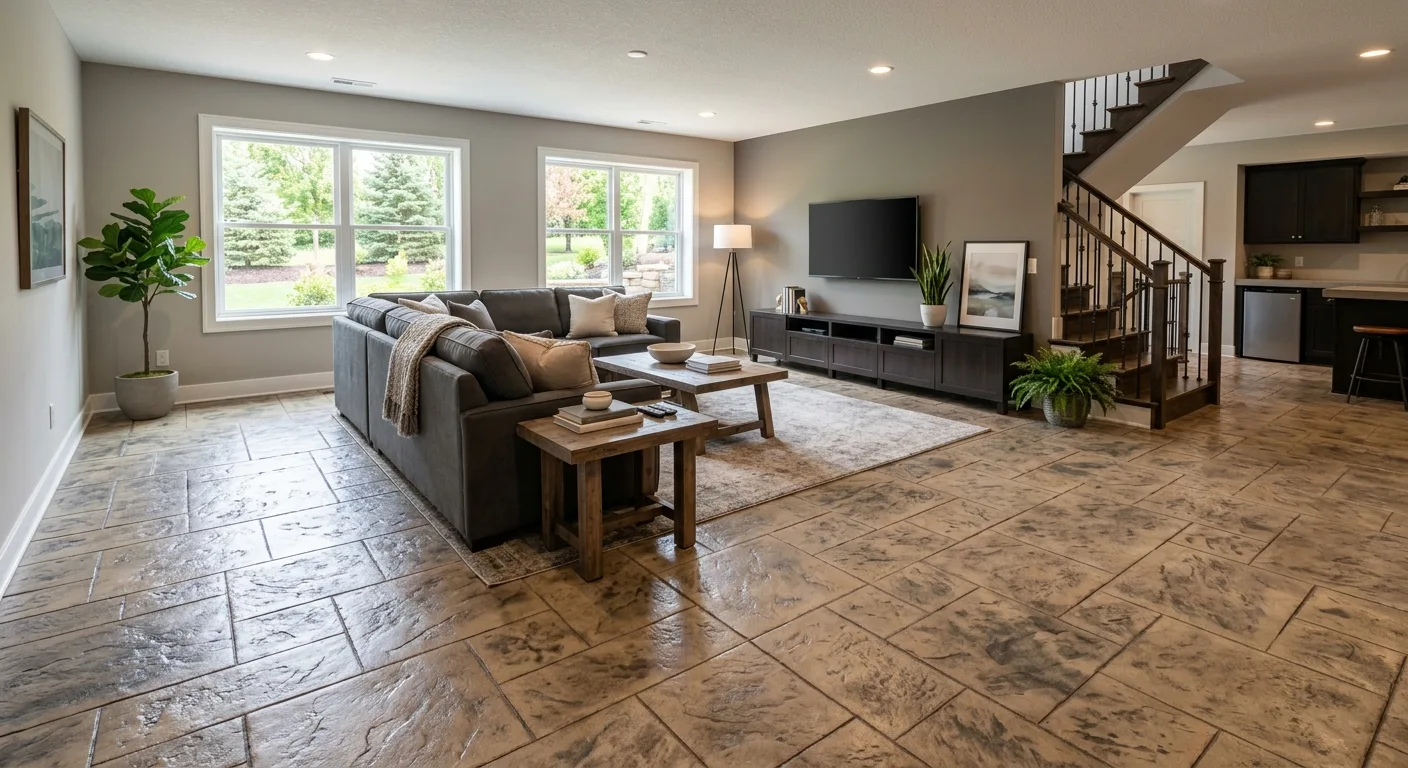
- Repairs show. A stamped slab is a single continuous surface, so if it does crack, the fix is visible. We can grind, re-stamp, and re-color a section, but it won't disappear the way a swapped-out paver does.
- Fresh sealant is slick. The surface gets slippery when the sealant is fresh and wet, which matters on pool decks and shaded north-facing patios. We add a fine anti-slip grit to the final sealant coat on those installs to solve it.
- It needs resealing. Skipping that schedule is the single most common reason a stamped patio in Bloomington looks tired after five winters.
"Get the base and the sealant right and the drawbacks shrink to almost nothing. Every problem people blame on stamped concrete is really a base-prep or a maintenance problem."
The drawback the freeze-thaw climate creates is specific to us. Bloomington and the south-metro suburbs run through 40-plus freeze-thaw cycles a season, and any water that gets under an unsealed or improperly based slab expands and lifts it. That's not a stamped-concrete flaw, it's a base-prep flaw, and it's why we compact the subgrade in lifts and slope for drainage before a single stamp touches the surface. Get the base and the sealant right and the drawbacks shrink to almost nothing.
Sealing and Maintenance in a Minnesota Freeze-Thaw Climate
Sealant is where stamped concrete lives or dies in Minnesota, and it's the part most contractors gloss over. The concrete itself is durable. The finish on top of it, the integral color and the topical hardener, is protected by the sealer, and the sealer is what the freeze-thaw cycle attacks first.
Our maintenance guidance is simple and specific:
- Reseal every two to three years, depending on how much sun and traffic the surface takes. South-facing driveways in Eden Prairie and Lakeville that bake in summer UV are closer to the two-year end; a shaded back patio in Bloomington can stretch to three.
- Do not use rock salt. Chloride deicers strip sealant and pit the surface faster than anything else you can put on it, and the damage is cumulative.
- Use sand for traction. It gives you winter grip without attacking the finish.
- Skip deicers the first winter. After a new pour, let the slab reach full strength before any deicer touches it.
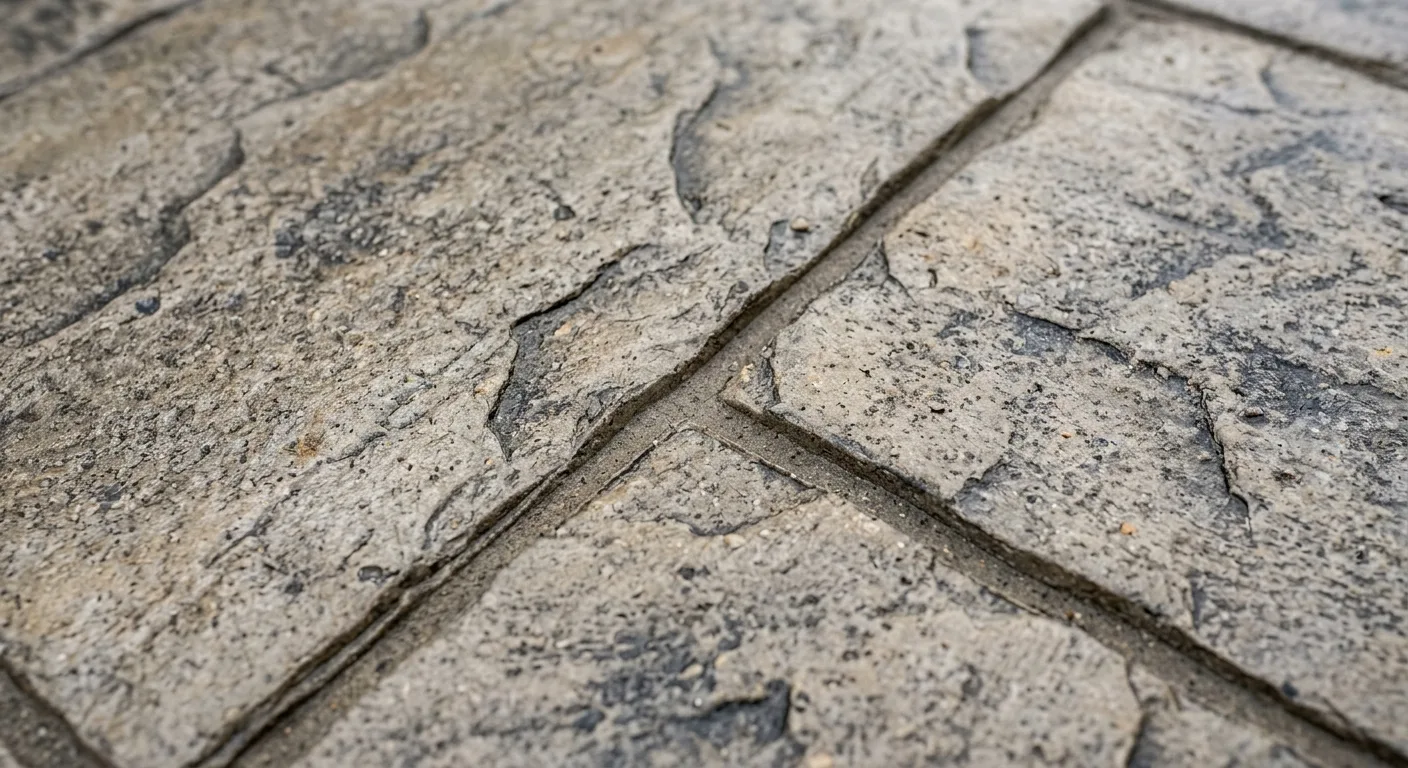
If your existing stamped surface has gone dull, chalky, or is showing water darkening, that's the sealant failing, not the concrete. Call (612) 462-2610 and we'll assess whether a clean-and-reseal restores it or whether a section needs more work. We reseal stamped surfaces we didn't originally pour, too.
Stamped Concrete Patio Installation Across the Twin Cities
Stamped concrete patio installation across the Twin Cities is the bulk of the decorative work we pour. From Minneapolis and St. Paul out through Plymouth, Burnsville, Lakeville, Apple Valley, and Brooklyn Park, a stamped patio has to survive the same freeze-thaw punishment every other slab in the metro faces, so the base prep matters as much as the pattern on top. We excavate to a stable subgrade, compact an aggregate base in lifts, and pour a properly air-entrained mix before any stamping starts. The Twin Cities sits on a mix of clay-heavy and sandy soils depending on the neighborhood, and a patio that drains poorly is a patio that heaves. We set the slab to pitch water away from the house and locate control joints so that any future movement cracks along a line you can't see instead of across the pattern.
"The Twin Cities sits on a mix of clay-heavy and sandy soils depending on the neighborhood, and a patio that drains poorly is a patio that heaves. On a stamped patio the base prep matters as much as the pattern on top."
Because every metro lot is different, the design stage is where a stamped patio earns its keep. We match the pattern and color to the house and the yard rather than handing you a catalog sample. If you're planning a fresh outdoor space rather than resurfacing an old one, look at the stamped finish options for a new concrete patio to see how texture and color decisions play into the larger build.
Stamped Concrete Driveway Installation in Minneapolis
A stamped concrete driveway in Minneapolis has a harder job than a patio. It carries vehicle load, it takes the worst of the winter plowing and deicing, and it's the first thing anyone sees from the street. That combination is exactly why base prep and mix design are non-negotiable on a driveway pour. We spec a thicker slab for vehicle loads than we would for a walkway, reinforce it, and place control joints on a tighter grid so the wider surface has room to move without cracking randomly.
The honest risk on a stamped driveway in Minnesota is deicing chemistry, not the concrete. Rock salt attacks the sealant and, over enough winters, the surface itself. We seal every driveway on completion and set you up with a resealing schedule, and we'll tell you plainly to use sand for traction instead of salt. A stamped driveway done right in Minneapolis reads like stone or brick pavers from the curb, without the settling and shifting that comes with individual units. Call (612) 462-2610 to talk through your driveway.
Our work
Recent Stamped Concrete Work
Browse our completed projects below. Patterns, color combinations, and scale vary by job.
FAQ
Common Questions About Stamped Concrete
Technical answers to what customers ask us most before committing to a project.
What is stamped concrete? +
How much does a 20x20 stamped concrete patio cost? +
Is stamped concrete more expensive than pavers? +
Does stamped concrete hold up in Minnesota winters? +
Does stamped concrete crack in Minnesota winters? +
What patterns and colors can I choose for stamped concrete? +
How long does a stamped concrete installation take? +
What is the most popular stamped concrete pattern? +
What are the drawbacks of a stamped concrete patio? +
Free estimate
Ready to Start Your Stamped Concrete Project?
Nova Concrete serves the Twin Cities metro including Bloomington, Plymouth, Burnsville, Brooklyn Park, Eden Prairie, Apple Valley, and Lakeville. Building in Bloomington specifically? See our Bloomington concrete patio page for local detail. We've been doing this work for 12 years, we're fully insured, and every job carries a 1-year warranty. Call (612) 462-2610 or use our online quote form to get the conversation started.
Or send us your info
What Customers Say
What Twin Cities Homeowners Say
"I had a great experience with NOVA. I got a quote, I ended up adding to it the day of…and they accommodated my request. They are fast, clean and do excellent work. I’m very pleased with the product and will be using them again for the next project. Highly recommend."
Amos J Olivarez
Verified Google review
"Had the team from Nova come and completely redo my front steps and patch up cracks in my foundation. They did an amazing job and the work was done quickly and went very smooth. Plus they are just good people! Highly recommend!"
Colin Owens
Verified Google review
"I had a really great experience with Nova Concrete LLC. They worked on my driveway and patio, and everything turned out exactly how I hoped. The crew was easy to work with, showed up on time, and clearly knew what they were doing. They paid attention to the little details, and it really shows in…"
Ashley Trevino
Verified Google review